JOURNAL

In publishing and graphic design, Lorem ipsum is a placeholder text commonly used to demonstrate the visual form of a document or a typeface without relying on meaningful content.

What materials are used for Rolex rubber straps? - Wristbuddys

What materials are used for Rolex rubber straps?

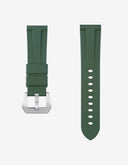
The significance of FKM rubber in luxury watch straps When it comes to selecting a watch strap for a luxury timepiece like a Rolex, the material is not just a matter of aesthetics but also of performance and durability. Among the various materials available, FKM rubber has emerged as a superior choice for watch enthusiasts and collectors alike. Wristbuddys offers an exclusive range of FKM Rolex rubber straps specifically designed for Rolex models, combining high-end functionality with sleek design. What is FKM rubber? FKM, or fluorocarbon rubber, is a class of synthetic rubber designed for extreme conditions. Recognized for its high resistance to heat, chemicals, and oils, FKM rubber is often used in automotive and aerospace industries where performance under stress is crucial. These properties make it an ideal choice as a material for a Rolex rubber strap, especially for owners who wear their timepieces in challenging environments or simply demand a high level of durability from their accessories. Durability and resilience FKM rubber straps are renowned for their exceptional durability. Unlike standard rubber or silicone straps, FKM rubber does not degrade easily over time. It maintains its integrity and flexibility, resisting the cracking, splitting, or drying out that can affect lesser materials. This resilience makes FKM rubber straps a practical choice for Rolex owners who want a strap that will last as long as their watch does, without compromising on performance or appearance. Resistance to elements One of the standout features of FKM rubber is its superior resistance to a wide range of chemicals, including oils and hydrocarbons, which might be encountered in everyday environments. Additionally, FKM rubber withstands high temperatures and ultraviolet light, ensuring that the strap retains its color and texture even with prolonged exposure to the sun or heat. This makes it an excellent choice for wearers who are frequently outdoors or in variable conditions. Comfort and style Aside from its technical benefits, FKM rubber also offers a high degree of comfort. The material is inherently flexible, which allows it to conform comfortably to the wrist, enhancing the overall wearability of the Rolex watch. Wristbuddys ensures that each strap is crafted with precision, offering a seamless fit that complements the elegant profile of Rolex watches without adding bulk or stiffness. Aesthetic versatility Wristbuddys’ FKM rubber straps are available in a variety of colors and finishes, allowing Rolex owners to personalize their timepiece's look to suit their individual style. Whether you prefer the classic elegance of black or the bold statement of a brighter color, there is an FKM rubber strap in our collection to match every personality and occasion. This versatility is key to transforming a traditional luxury watch into a modern style statement that stands out in both functionality and fashion. Conclusion: Enhancing your Rolex with FKM rubber Choosing an FKM rubber strap for your Rolex means opting for an upgrade in durability, comfort, and style. Wristbuddys takes pride in offering a selection of rubber straps that meet the high standards expected by Rolex wearers. Each strap combines the resilience of FKM rubber with thoughtful design, ensuring that your luxury watch is not only a showcase of impeccable taste but also a tool ready for the challenges of everyday life. Explore our complete range of FKM rubber straps designed for Rolex at Wristbuddys, and discover the perfect blend of durability and design for your timepiece. Discover more: Visit our website to see how these durable, stylish, and comfortable FKM rubber straps can transform your Rolex experience, marrying traditional luxury with contemporary resilience and flair.

What makes rubber straps a good choice for watches? - Wristbuddys

What makes rubber straps a good choice for watches?

The versatile appeal of rubber watch straps In the dynamic world of watch accessories, rubber straps have carved out a significant niche due to their unique blend of functionality, comfort, and style. As a leading provider of premium watch straps, Wristbuddys offers a diverse collection of rubber straps designed to meet the varied demands of watch enthusiasts. But what exactly makes rubber straps a must-have for your watch collection? Let’s delve into the reasons that make these straps indispensable for both casual wearers and seasoned collectors. Unmatched durability and resistance One of the standout features of rubber straps is their incredible durability. Unlike leather straps that can degrade over time due to exposure to moisture and sweat, rubber straps are designed to withstand the rigors of everyday use. They are inherently water-resistant, making them an ideal choice for swimmers, divers, or anyone who doesn’t want to worry about damaging their strap during daily activities. Furthermore, rubber is resistant to UV radiation and various chemicals, which helps it maintain its color and integrity even when exposed to harsh environmental conditions. This makes rubber straps not just durable but also a long-lasting accessory that retains its aesthetic appeal over time. Supreme comfort for daily wear Comfort is key when it comes to choosing a watch strap and rubber straps excel in this area. The material’s flexibility allows it to conform comfortably to the wrist, providing a snug fit that doesn’t pinch or feel restrictive. Whether you’re engaging in sports, heading to work, or relaxing at home, a rubber strap ensures that your watch stays securely and comfortably in place. Additionally, rubber’s hypoallergenic properties make it a safe choice for individuals with sensitive skin, reducing the risk of irritation that can be caused by other materials. Aesthetic flexibility Wristbuddys’ rubber straps come in a variety of colors and styles, allowing watch owners to personalize their look to match their personal style or even their mood. From classic black to bold, vibrant colors, rubber straps offer the flexibility to switch up your watch’s appearance without needing to invest in multiple timepieces. These straps are not just functional; they are also stylish. They can be easily paired with casual, sporty, or even semi-formal attire, making them versatile accessories that enhance any outfit. Easy maintenance Another significant advantage of rubber straps is their ease of maintenance. Unlike leather, which requires regular conditioning, or metal, which may need polishing, rubber straps are incredibly low-maintenance. They can be cleaned with a simple wipe down using a damp cloth, ensuring that they look fresh and new with minimal effort. Ideal for active lifestyles For those who lead active lifestyles, rubber straps are particularly appealing. Their robust nature ensures that they can keep up with high-intensity activities without suffering wear and tear. Whether you’re a fitness enthusiast, an outdoor adventurer, or someone who travels frequently, a rubber strap is likely to be your best companion, ensuring that your watch is always secure on your wrist. Conclusion: The practical choice for modern watch wearers Rubber straps represent the perfect marriage of practicality and style for modern watch wearers. With their durability, comfort, aesthetic versatility, and low maintenance requirements, they offer numerous advantages over traditional strap materials. Wristbuddys continues to innovate in this space, providing high-quality rubber straps that meet the needs of diverse watch enthusiasts. Explore the full range of Wristbuddys rubber straps and discover the perfect accessory for your watch at Wristbuddys. Embrace the practicality, style, and comfort that our rubber straps bring to your timekeeping experience. Discover more: For those interested in exploring the benefits of rubber straps further, visit our website. Our extensive collection offers options for every taste and need, ensuring that your watch not only performs well but also reflects your unique style.

Rubber straps on luxury watches - Wristbuddys

Rubber straps on luxury watches

Why rubber straps are ideal for luxury watches Rubber straps offer a stylish and modern alternative to leather or metal in the world of luxury watches, where tradition dictates many aspects, including aesthetics and construction. Wristbuddys leads this trend with high-quality rubber bands that seamlessly match up with some of the most prestigious watches on the market. Rubber in luxury horology Rubber hasn't always been associated with luxury, but that has changed rapidly in recent years. Leading luxury watch brands have adopted rubber straps due to their comfort, durability, and versatility - this trend not just about fashion but also functionality; resilient yet elegant rubber straps make for ideal watch owners with varied lifestyles. Durability meets design Rubber straps are popular due to their durability. Rubber is highly water and sweat proof, making it the ideal material for outdoor sports where leather straps wear out quickly or become uncomfortable due to temperature variations. Rubber straps are popular choices among watch enthusiasts who appreciate both style and substance in their accessories. Being hypoallergenic, UV light-proof, chemically resistant, and long-wear resistant makes rubber a versatile material choice that withstands prolonged usage - a smart combination for everyday watch enthusiasts looking for both style and substance in their pieces. Wristbuddys has perfected the art of merging fashion and function. Offering luxury watch rubber straps in various colors and styles - from bold hues that make a fashion statement to subtle hues that show elegance in subdued tones - Wristbuddys offers rubber bands to complete your watch collection in style. From bold colors that make an eye-catching fashion statement to subtle tones which exude understated elegance there is bound to be one suitable to your lifestyle. Rubber straps offer an easy way to quickly update the appearance of your watch without compromising quality, giving wearers more options for fitting it to various outfits and occasions. Rubber straps offer unsurpassed levels of comfort. Their flexible yet soft material conforms perfectly to your wrist without binding or pinching, creating an incomparably snug feeling as though it were custom-made just for you. Plus, rubber is neutral against skin tone so can even be worn in climates where metal bracelets might feel too cold while leather may absorb too much moisture - perfect for climates where metal may feel too cold! Ideal for watch owners who enjoy extensive watch use Rubber straps are an ideal way to protect a luxury watch when living an active lifestyle, whether diving into the sea, hitting the gym or going on an expedition. Rubber bands provide extra cushion against accidental drops from diving boards or on hikes. One reason they're so popular is their easy maintenance: most dirt and sweat can be removed by wiping it with a dampened cloth. Wristbuddys contribution to luxury watch market Wristbuddys identified a need in the market that wasn't being met: premium leather straps weren't meeting luxury watch owners' demands for high quality and stylish straps that fulfilled them. Wristbuddys has since become the market leader in premium rubber straps through targeting this niche market. Conclusion of modernity and elegance Rubber watch straps will likely become increasingly popular within the luxury watch industry as enthusiasts look for stylish accessories that combine form and function. Wristbuddys leads this revolution of stylish luxury watch straps; their straps maintain all of the prestige and elegance associated with classic luxury watch designs while adding modern appeal that appeals to new generations of watch owners. Wristbuddys offers the largest selection of rubber straps to transform and upgrade your watch at Wristbuddys, where innovation meets tradition when it comes to watchmaking.  Explore more: If you are interested in adding Wristbuddys versatile and elegant rubber straps to your luxurious watch collection, take a look at our collection. Find one that complements both its aesthetics and functionality perfectly for yourself and watch!Discover timeless elegance with pre-owned luxury watches from S&R Jewellers, where authenticity meets exceptional value.

Omega Speedmaster Dark Side Of The Moon Apollo 8 - Wristbuddys

Omega Speedmaster Dark Side Of The Moon Apollo 8

A rich history and watches go well hand in hand. The Omega Speedmaster, in particular, is a well-known watch model with a fascinating story. In 1968, the memorable Apollo 8 mission took a historic journey to the moon before Neil Armstrong’s lunar landing. It marked the first time the Saturn V rocket carried humans to the moon. The goal was to orbit the moon, and the astronauts succeeded, they even witnessed the moon’s far side. During this mission, each astronaut wore an Omega Speedmaster. Thats why the name of this model is the Omega Speedmaster Dark Side of the Moon Apollo 8. It not only an amazing history with the astronauts’ incredible feat but it also added more significance to watches in space. Omega Speedmaster became a mega success. The remarkable aspect was that the spacecraft lifted off from Earth three days before Christmas, and on Christmas Eve, they orbited the moon for 20 hours, managing to broadcast TV images back to Earth for a period, making it the most-watched TV broadcast at that time.                     The Omega Speedmaster Dark Side of the Moon Apollo 8 model has various versions, and this particular one has been enhanced compared to its predecessors. The watch is incredibly detailed and visually captivating. The standout feature is the small seconds sub-dial at 9 o’clock, showcasing a miniature version of the Saturn V rocket. Crafted from grade 5 titanium using laser technology, it’s meticulously painted white with black details applied through color laser. Upon close inspection, you’ll even find “USA” written in black on the back end of the rocket.    Similar to the previous version, this one features a partially skeletonized dial. The new thing is the enhanced depth of the sub-dial with Saturn V for a more pronounced presentation of the rocket. The surface of the dial mimics the texture of the moon as seen from Earth. The open case back allows a view of the movement, with certain components treated to replicate the structure of the moon’s dark side—the side facing away from Earth, a sight the astronauts experienced during the successful orbit of the moon in 1968.   Black ceramic case and bezel, the watch features a glossy ceramic tachymeter with white “Grand Feu” enamel. With a diameter of 44.25 mm, consistent with other versions in the Dark Side of the Moon collection, and a thickness of 13 mm, it maintains a sleek profile. Weighing only 99 grams, it’s a lightweight and comfortable choice. The watch houses a new manual movement, caliber 3869, with Master Chronometer certification from the independent state testing organization METAS. This certification ensures precision timekeeping, antimagnetic properties up to 15,000 gauss, and the promised water resistance of 50 meters—suitable for swimming but not for diving. Additionally, the movement undergoes testing for a power reserve of 50 hours to guarantee sustained energy performance.   The engraving on the back adds an extra touch of significance, featuring the words “We’ll see you on the other side,” the last words spoken by pilot Jim Lovell before they disappeared on the far side of the moon, where radio contact was lost.    The watch comes with a black perforated rubber strap with yellow stitching and a folding clasp made of titanium. Given the watch’s black base with yellow accents, it pairs well with a colored strap. Breaking the monotony with a contrasting color or even an all-yellow strap can create a stylish and eye-catching look.  Looking for new straps for your Omega Speedmaster? Wristbuddys offers rubber straps for Omega Speedmaster in different colous for the popular watch.    Price 15 700 euro, ref 310.92.44.50.01.001Financing a luxury watch can make ownership more accessible. YourAsset offers tailored financing solutions to help you acquire timepieces like the Omega Speedmaster Apollo 8.

Watches in the intelligence world - Instruments for survival - Wristbuddys

Watches in the intelligence world - Instruments for survival

  In today's digitalized world, wristwatches have been rendered virtually redundant in people's daily lives, but in the mysterious world of global espionage, they remain central. Wristbuddys explains why. The sun was sharp in my eyes, it was bright as a welding torch. I was embraced by a tropical dream. A light breeze against my body, the nurturing, unmistakable roar of the ocean, the soft sand against my feet. We sat in the usual plastic chairs next to a simple bar on the beach, a few colleagues and acquaintances, in a conflict zone in Africa. Opposite me was an "attaché" from the US embassy. Or more like a marine, judging by his body armor and confident manner. CIA. We discussed the head of security at the war crimes tribunal in Freetown, who was suspected of smuggling diamonds. "You're going home in a body bag" said my Norwegian colleague in sounding Norwegian-English, referring to the people I was hanging out with. But I survived. The above story is true. It came to mind when I found an article in Hodinkee, the major US online watch magazine, about the importance of mechanical watches to US intelligence. It was written by a former CIA case officer, who remains anonymous. It's funny, but that's what they're called, 'handlers', like any social worker, the operational spies who gather intelligence for the US in every corner of the world at the risk of their lives. Incidentally, the Hodinkee article was approved by the CIA's Prepublication Classification Review Board to prevent the leakage of classified information. This is of course also encouraging. CIA operatives Watches have been around for many hundreds of years, and when the 20th century was young, these mechanical little timekeepers had been given bracelets and started to frequent the wrists of more and more ordinary citizens around the world. In the last decade or so, however, the importance of the wristwatch as a timekeeper has virtually disappeared. And this is of course due to the rapid spread of the mobile phone in the world's societies.   But in the world of intelligence (the author of the Hodinkee article mentions foreign intelligence gathering, covert operations and counter-intelligence), they are still highly relevant. Firstly, measuring time - and it can be a matter of seconds - is an absolute necessity for an operator in the field. It can be a matter of life and death.   But why can't you just do it on a mobile phone or a smartwatch, like ordinary people? The uses of the mechanical wristwatch   In the James Bond films, the British super intelligence officer is frequently seen wearing expensive wristwatches. In the films up to 1989, with the entire line from Sean Connery to Timothy Dalton, it is mainly the Rolex Submariner, while the Omega Seamaster, as you know, took over the role of Bond's service watch with the arrival of Pierce Brosnan in 1995. You'll see it with metal bracelet on the picture, but today you can easily change the Rolex bracelet to a Rolex leather strap or a Rolex rubber strap for versatility.  Bond Submariner, Live & Let Die 1973 However, this kind of exclusive diver's watch is a common sight on real-life spy wrists as well. Firstly, the use of the mechanical wristwatch for intelligence operators is so much broader than just measuring time. They are also tools with several other key functions. Mechanical watches are used to build relationships, recruit agents by gift/bribes. They are used where traceable electronic devices cannot be used, as payment in emergencies, in analyzing the psychological profile of foreign leaders, and so on. Bond Submariner, Dr. No 1962 Bond Submariner, Live & Let Die 1973 Recruitment Mechanical wristwatches are central to the intelligence officer's own work, but are also used as a payment, or bribe, to recruit agents. As an 'operational gift'.   And a better branded watch is an ideal gift as it is instantly recognizable to most people - from shaggy rebel leaders in the darkest corners of Africa to polished diplomats in Geneva. It can be worn like a piece of jewelry, giving the agent status and attracting recruitment. An extreme example is the gold Patek Philippe pocket watch that a young Dalai Lama received as a gift from US President Franklin D. Roosevelt in 1943, allegedly to make the little Dalai compliant for an American road construction through Tibet to assist the Chinese against the Japanese. Watches can also be used to initiate a conversation with a foreign intelligence officer (depending on what they are wearing) in the hope of making contact and perhaps starting to build a relationship. Dalai Lama with a Patek Philippe pocket watch Untraceable instruments    Thus, in a world where electronic devices can be tracked, they pose a security risk to operators in the field. This means that mechanical wristwatches are being used for what they were originally designed for: measuring time. A reliable watch can therefore be essential to carry out a mission without leaving digital traces, which can be exploited by foreign security services, putting the spy's life at risk and ultimately threatening national security. Omega Speedmaster, untraceble Payment instruments in trouble   One reason to wear an exclusive watch during a mission is that it can serve as a valuable bargaining chip in a crisis situation. If you are in distress, the watch can act as a currency that can be exchanged for a hiding place in a basement, transportation to the border or whatever. Furthermore, a Rolex is so much more convenient and secure to carry (i.e. wear on your arm) than gold or cash, which can be lost more easily. Incidentally, watches were part of the "life barter kits" or "escape & evasion kits" that American fighter pilots carried in their planes during World War II and the Cold War, to be used as payment in an emergency after a crash over enemy territory. Raymond Reddington, The Blacklist, GMT Master “War zone watch”   When an American intelligence officer completes their mission, a mission that often involves great physical as well as mental strain and perhaps a milestone in life itself, it is common for them to reward themselves with a gift - often an exclusive watch. To remember and be reminded. A "war zone watch", pure and simple. It could be an Omega Seamaster or Rolex GMT Master acquired during a stopover in Doha or Dubai. James Bond, as fictional as the character is, is said to have a surprisingly large influence on the choice of wristwatch in these contexts. Breitling and Panerai are also popular with CIA operatives operating in Africa and the Middle East. Both sell reliable and durable watches that have a high exchange value due to their recognizability and status. Another popular watch is the tudor black bay 58. The continuing importance of the mechanical watch  The mobile phone, which has been embedded in every corner of the world and eliminated the need for a wristwatch, has a weakness: it is much more difficult to read. This is the same monkey that once afflicted the pocket watch, which gave rise to the wristwatch. It was born in the trenches of the First World War and in the cockpits of early airplanes, where it was discovered that it was extremely impractical - and therefore dangerous - to have to dig in your pockets for your watch. It's so much quicker to just flick your wrist and get a time within a second. And thus survive. Today, of course, there are the smart wristwatches that further destroy the need for a mechanical watch. So, the lost importance of the mechanical wristwatch as a timekeeper may be a fact for the average person, but for an intelligence operator in hostile territory, his (or her) survival tool can also be used to do just that - measure time, quickly, efficiently and invisibly. And still superior to a cell phone or a smart watch. I wish I could transport myself back to that sunny Sunday afternoon on Lumley Beach in Freetown, to see what watch my table companion - the "attaché" from the US Embassy - was wearing that day. Obviously, it never occurred to me to watch-spit when it happened. No, I don't think I would have been much of an intelligence officer.

The US Watch Industry - A Historic Player - Wristbuddys

The US Watch Industry - A Historic Player

The North American watch industry today lags far behind the Swiss and Japanese, both in popular and industrial consciousness. However, its history is rich and highly significant for the global development of wristwatches. Wristbuddys unravels the history and takes the temperature of US watch brands today. Background  Switzerland and Great Britain began developing and producing watches in earnest in the 18th century, well ahead of the United States. However, it remained a pioneer in automation and mass production, leaving the Swiss and British behind in the second half of the 19th century. The American watch industry was born in Waltham, Massachusetts, in the 1850s, at the cradle of the Industrial Revolution. At this time, Waltham-based companies developed some of the world's most advanced machines and tools for cutting metals, as well as machines for the mass production of metal parts. These were also applied to watchmaking and the Waltham Watch Company was the first to produce a 100% American-made watch. The large-scale manufacturing system not only allowed for greater efficiency and lower prices, but also proved to achieve the same quality as the Swiss handmade watches.   This led to a significant drop in sales of Swiss watches in the United States, and in 1876 a Swiss delegation was sent to Waltham to investigate what was going on. The sight of the machines and automated processes shocked the Swiss, who realized that they could not produce mechanical parts with the same precision or on the same scale. These inventions came to revolutionize the entire watch industry and it is here that the North American industry holds such significant historical importance. However, it then slowed down; Switzerland learned this type of automation in the first decades of the 20th century and eventually caught up, even in terms of sales on the American market. Two disruptive global events further contributed to the decline of the American watch industry: the Great Depression and World War II. After the stock market crash of 1929, watches remained a luxury item that few could afford and those manufacturers that did not switch to the production of wristwatches popularized by the First World War, such as several American ones, eventually went under. During World War II, the focus of watch factories shifted to the production of military equipment, which meant that neutral Switzerland returned to the American market with a vengeance. As it took time for the Americans to return to civilian watchmaking after the war, Switzerland maintained its grip even after the end of the war, a position that has been cemented to this day. The companies BALL The BALL Watch Company was founded by jeweler Webb C. Ball in Cleveland, Ohio, in 1891. After several train collisions caused by poorly synchronized timekeeping between different American cities, Ball invented a system of time standardization for the vast US rail system to avoid future accidents. This also included train crew watches, which faced high precision requirements under Ball's new "railroad grade" certification, a strict standard that actually inspired Switzerland's famous COSC certification, which is still in force today. Thereafter, Ball began purchasing and modifying movements from other manufacturers such as Elgin, Hamilton and Waltham, including extra careful adjustment to achieve railroad grade precision, and then selling them under his own brand. This type of production continued until the mid-1980s when the company changed hands and the headquarters and production moved to La Chaux-de-Fonds, Switzerland. For a number of years, the company has been owned by Hong Kong-based Asia Commercial Holdings. Benrus Benrus was founded in 1921 by three brothers who ran a watchmaking workshop in New York. Production consisted of the assembly of externally sourced parts, including movements from Switzerland. During World War II, production shifted to military wristwatches and other measuring equipment for military use, while in the 1960s it supplied field watches to US troops in the Vietnam War. In the 60s and 70s, the focus was on sporty wristwatches such as divers' watches. Interestingly, Steve McQueen wore a Benrus field watch in the 1968 car chase movie Bullit. The company then changed hands several times due to financial problems and the brand fell into oblivion, although Benrus-flagged quartz watches continued to be produced for some time. The brand was revived in 2020 by American investors and with the headquarters again located in New York. Today, it produces humanely priced retro-style sports and field watches that are assembled in the United States and powered mainly by mechanical movements from the Swiss company ETA.   Bulova The J. Bulova Company was founded in the USA in 1875. Production moved to Switzerland in 1912, bringing with it the type of mass production invented in North America. The focus was on men's and women's watches for the general public and the brand remained popular even in the American market. One of the more famous Bulova watches is the Accutron, an electronic wristwatch introduced in 1960 and launched in 1971. Electronic watches differed from quartz watches in that they were powered by electromagnets that provided fully floating second hands and produced a 'humming' sound. In 1923 the name was changed to Bulova Watch Company and in 1979 it was bought by the American Loews Corporation. Since 2007, the brand belongs to Japanese Citizen and today Bulova watches are produced in Switzerland, Japan and Hong Kong. Bulova factory 1937 Elgin  The Elgin National Watch Company was founded in 1864 in Elgin, Illinois, and remained the world's largest watch factory by area for the next 100 years. The initial focus was on pocket watches for the average person, and the company made half of all pocket watches produced in the United States. As early as 1910, wristwatches began to be produced with proprietary movements that eventually received automatic winding. During World War II, all civilian production ceased and the company switched to military watches, aircraft instruments and other military equipment. In 1968, all production in the US ceased as competition from Switzerland and Japan became too great, and the rights to the name were sold, eventually ending up in China. Hamilton  Hamilton was founded in Lancaster, Pennsylvania, in 1892 when it began manufacturing pocket watches. These were marketed as 'railroad watches' to emphasize their reliability and accuracy. In 1917, the company released its first wristwatch, a nod to men who fought in World War I, which popularized the novelty of snapping the watch around the wrist instead of keeping it in the pocket. During the Second World War, all civilian watch manufacturing ceased and production went to the troops overseas. Over one million Hamilton watches were sent to the war. Like other American watchmakers, Hamilton learned the art of mass production and was thus able to produce thousands of marine chronometers and ship instruments for the US Navy as well as for allied forces. After the war, Hamilton continued to produce military timekeeping equipment for various military powers until the late 1980s, while resuming production of civilian wristwatches. However, production in the United States ceased in 1969 and the company was eventually swallowed up by the Swiss Swatch Group. Today, all production takes place in Switzerland. Timex Timex history begins with the Waterbury Clock Company, founded in 1854 in Connecticut. The focus was on affordable, mass-produced pocket watches while the production of wristwatches began with the First World War. In 1941 the company changed hands due to financial problems and the name was changed to United States Time Corporation, and like other US brands, the focus then shifted to the production of military components. After the war, the company returned to producing and marketing affordable wristwatches and remained the largest watch manufacturer in the United States. In 1950, the Timex name began to be used on the watches and in 1969 the company formally changed its name to Timex. The brand adapted to the quartz crisis and started producing cheap and durable quartz watches. In 2001, production ceased in the US and moved to the low-wage countries of the Philippines, China and India. Today, Timex-dedicated movements are also manufactured in Switzerland. Waltham Watch Company  The Waltham Watch Company pioneered the mass production of quality watches, producing 40 million watches and various measuring instruments in the United States by 1957. The following decades saw a number of name and ownership changes, and the company name traveled like a pinball between the US, Switzerland, Japan and back to the US again. No wristwatches have been produced for many years and today only aircraft instruments are built by the Waltham Aircraft Clock Corporation. Today there is only modest wristwatch production in the United States; Japan and Switzerland have long dominated the watch industry. However, many of the American watch brands live on as trademarks and thus carry on their heritage and history, even if the ownership and the actual production takes place in other countries. That, at least, is encouraging.

Blancpain X Swatch launches Ocean of Storms - Wristbuddys

Blancpain X Swatch launches Ocean of Storms

  The year of 2024 kicked off with a new launch within the collaboration between Swatch Group-owned Blancpain and Swatch. The collaboration has previously generated five models in different colours, and now it is finally time for one in black, the name is Ocean of Storms. Blancpain has a long tradition of watchmaking. In fact, their very first Fifty Fathoms was presented 70 years ago. The watch revolutionised the world by being the first modern diver's watch and it was designed by a passionate sport diver, Jean-Jacques Fiechter. Jacques Fiechter, who was the CEO of Blancpain at the time. The watch instantly became very popular with elite divers and underwater divers and underwater researchers, thanks to its favourable characteristics such as water resistance, double sealing of the crown, easy-to-read dark dials with good contrast to the luminescent detailing and the unidirectional rotating bezel. After launch, the watch could be seen in popular diving films and the German and French navies started using the watch, but it didn't stop there. The US Navy Seal's elite diving unit also discovered the watch and used it. Over the years, the Fifty Fathoms models have continued to enjoy a high status among professional underwater explorers and collectors. However, the brand has not been so well known to the average person in the world. The brand however got a real boost after they decided to make a similar collaboration with Swatch as Omega did with Moonswatch. And now this collaboration continues with the addition of a new colours to the collection.   Black in particular is a very smart and wise choice for them to make, simply because the previous models have a more playful colour scheme. A more playful colour scheme that is not so easy to wear for everyone, especially if you have a more sophisticated style. There was an absence of a more stylish version, which is why Ocean of Storms fits in very well as a hit on the market.    The black colour is inspired by the black moon and, in the same spirit as the other five models, the case is made of a material that consists of two-thirds ceramic and one-third biosourced material derived from castor oil.   The watch has an automatic movement, SISTEM51, which is also found in their previous Blancpain X Swatch. This was developed by Swatch back in 2013 and consists of only 51 parts, hence the name. Another positive thing is that it has an anti-magnetic property thanks to its NivachronTM balance spring. It's fascinatingly how this mechanical movement is entirely assembled using automated assembly. This is in other words not assembeld by hand, all in the name of efficiency and cost reduction. The power reserve is 90 hours and has an open back where you can see the parts of the movement that are laser-decorated. Each model also has its own signature on the back and the new one's has an image of a neck snail called Okenia Luna.   The fact that the watch is water-resistant to 91 metres is not a coincidence, it is more than just a figure. It's a tribute to the name of the watch, Fifty Fathoms, where Fathoms historically means the the nautical measure of a depth and fifty fathoms is the equivalent of 91 metres.   The watch comes with a black nato strap with white stripes that contains recycled material from fishing nets and the pin buckle and pre-made holes are also made of the same black material as the case. If you want a more stylish and comfortable bracelet in a more uniform colour, Wristbuddys has a uniform of straps for Blancpain Swatch in seven different colours. For example, the overall look of the watch can be enhanced with an all-black strap, or why not spice up your summer look with a bracelet in orange. Changing a bracelet for a certain outfit can do a lot for the overall look and with a black watch that is so stylish in itself, it becomes wonderfully sporty and elegant with a different strap for Blancpain Swatch. The buckle is 304L stainless steel and the width of the rubber strap is 22 mm which moulds itself well and comfortably to the wrist. See our favorites for Ocean Of Storms collection below:    The Blancpain X Swatch Ocean of storms will be launched worldwide from 11 January, the day of the of the new moon, at selected Swatch stores. And precisely as with the five previous models in the Scuba Fifty Fathoms Collection, they are not limited in number but are limited to one watch per person, per store and per day.   BLANCPAIN X SWATCH OCEAN OF STORMSReference number: SO35B400Case material: BlackDiameter: 42.3 mmThickness: 14.4 mmDial: Black with sunburst finish, date at 4 & 5 o'clock. Superluminova on the hands, index and dive scale.Water resistance: 91 mStrap: NATOMovement: Mechanical movement SISTEM51Power reserve: 90 hoursWinding: AutomaticPrice: $400